I admit it! I used to be a “food-waster”.
- I used to buy too much at the grocery store then throw the wilted lettuce away a week later.
- After buying a quart of Ben and Jerry’s Fish Food, I would pick the next day to start a very STRICT diet. Of course I could not have ice cream in the house so……..yep…..I ate it! But I thought long and hard about wasting it instead.
- I’d dine at a restaurant and leave way too much food for the restaurant to throw away. OR…..even worse…..I’d take the leftovers home in a STYROFOAM container (really bad) and then throw the food away myself a month later.
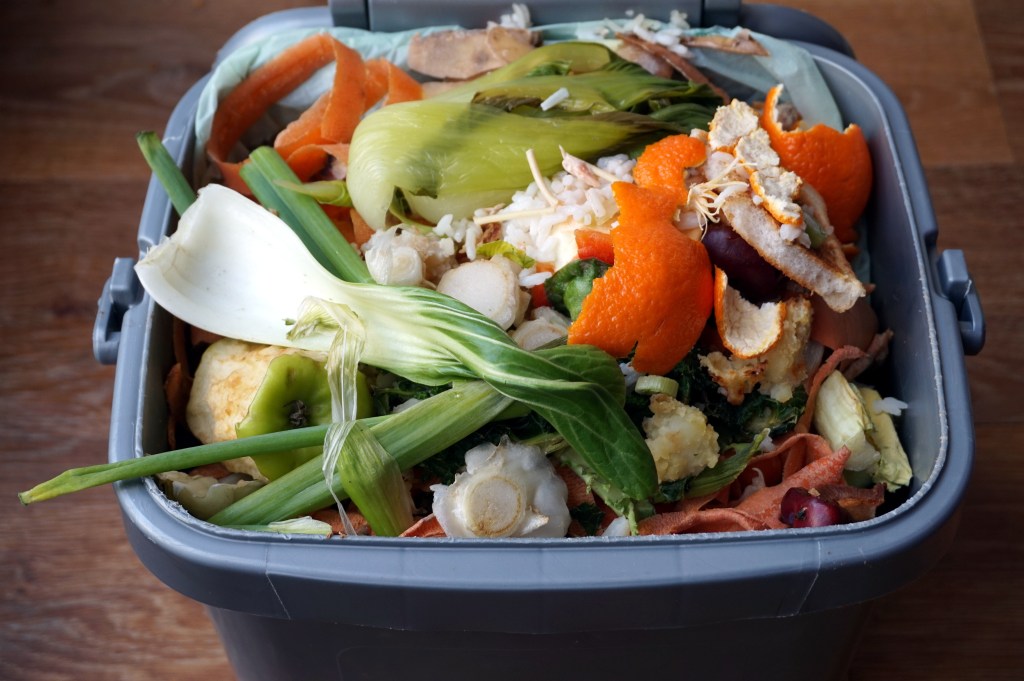
BUT!! This was a long time ago before I heard a shocking statistic. At least 30-40% of all the food grown is actually wasted. WASTED! The land, water, labor, and energy used to produce, process, transport, prepare, store, and dispose of this food is gone! And to think that this food could have been used to actually feed hungry people around the world and our precious non-renewable resources could have been preserved. I remember while growing up my brothers and I had to eat all of our leftovers because, according to my parents, “there are millions of starving kids in Africa”. We would just roll our eyes unconvinced but, naturally, my parents were correct as usual. Of course, this was simply a metaphor for us to be grateful and recognize that we are privileged to have enough to eat.
Since my food waste “epiphany”, I have become a strong advocate for food waste reduction and composting. I’m proud to say that my husband and I have cut our waste by about 98%. Here are my tips for reducing food waste.
- plan grocery purchases carefully
- if you buy food, eat it (leftovers too)
- if you don’t eat it, then compost it
- bring your own reusable container with you to a restaurant for your leftovers. And don’t let those leftovers spoil in the fridge.
Why is it bad to throw food in the trash?
When we throw food in the garbage can it ends up in a landfill where it does not have access to oxygen. As it breaks down it creates methane which is a powerful greenhouse gas. Methane is 86 times more powerful than carbon dioxide. This has a huge impact on global warming.
What can we do with our food waste?
We can compost our food waste. It’s quite easy to do once you learn how. If you don’t want to learn how to backyard compost, you can buy a subscription to a compost pick-up service. Since I’m a relatively lazy person when it comes to things like this, I have opted for a biweekly pickup service. I won’t go into detail on composting because there are many articles about it on-line where you can get all the information you need. Here is one such site.
 KATHLEEN CORBIN
Leave a comment